Case study migrated from the previous portfolio.
A holistic redesign of the scheduling workers, the centerpiece of Shiftgig, focused on improving the speed of entry and increasing the quality of content.
Introduction
Shiftgig’s platform does a lot orchestrating a great work experience but the core is defining upcoming work and allowing workers to claim that work. In order to get the work into the system or request workers for a job, an operations user or a client directly will set up a structured description of the work. The feature that supported that was never designed holistically and evolved greatly over the years – leaving a mess of disparate flows and inconsistencies.
Pains
- Five disparate ways of submitting requests. All with nuanced differences that support profoundly different functionality, such as requiring the same worker across a long term assignment was a separate flow.
- Tedious to enter quality content every time because it required you to enter the information every time when the majority of the content is consistent for a given client.
- Bad content often due to laziness or lack of understanding of its importance to the worker.
- Operations experience not mobile optimized to support their on-the-go behavior.
Proposed Solution
The solution was focused on greatly simplify content entry at the time of request by leveraging a sophisticated template system. A request consists of multiple template pieces that when put together created a comprehensive work details for the worker to see. The solution was foundational work that simplified the core of the experience with expectations to expand the functionality and better connect the user to the worker who will be seeing the work.
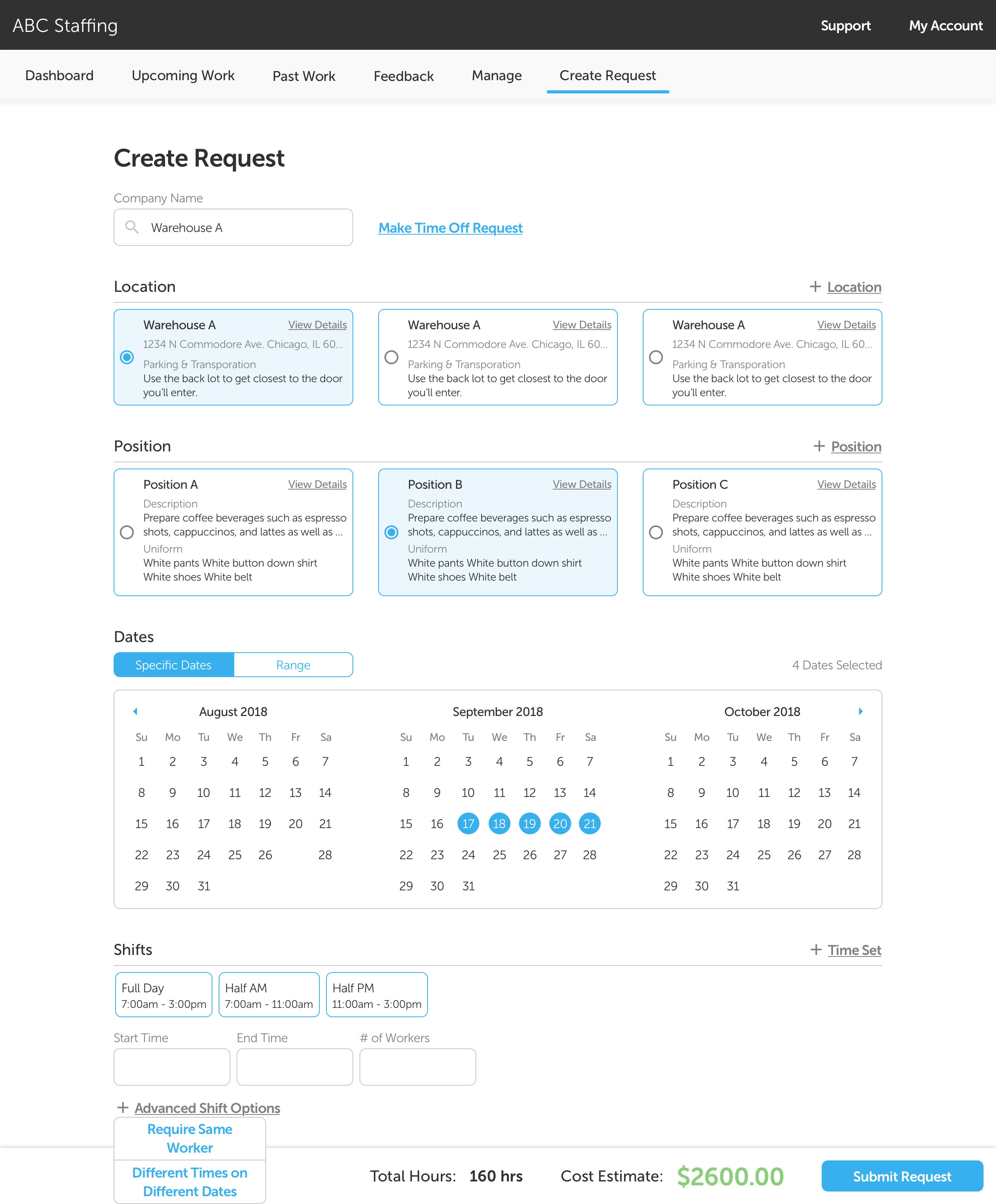
Highlights
- The first project prioritized from design vision work that was a part of an innovation week. It was the blueprint that operationalized our design vision process.
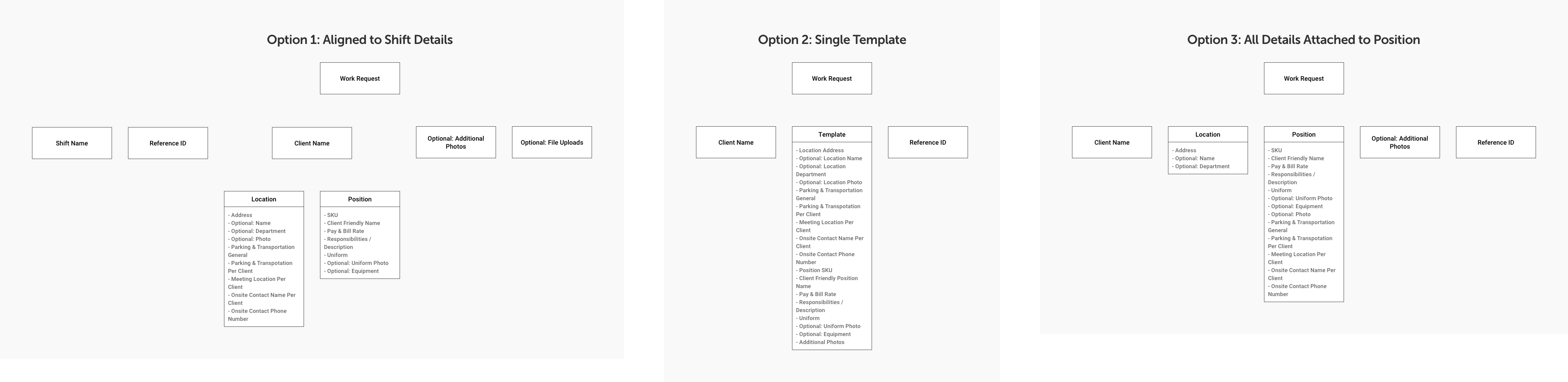
- A more advanced template system that was advocated for based on how our users expect the organization of the information that pushed our engineers to go beyond a more common templating system. (Multiple templates per request versus a single template for all information).
Process
This project consisted of many starts and stops because of shifting priorities and unforeseen backend issues introduced requiring scope expansion.
Discovery
A lot of research was performed because of the length of time between work. A contextual inquiry was performed to understand the workflow of operation users that used a different tool other than Shiftgig for their staff scheduling. Another contextual inquiry was performed to understand the workflow of operation users that used Shiftgig for scheduling. Both studies uncovered the importance of saving time and low cognitive load due to the task often being completed intermittently between other tasks.
Beyond understanding the requesters, we spoke with workers to understand the value of the details of the shifts. We discovered how important clear and descriptive details helped prepare workers for success and reduce anxiety.
Beyond user research, we performed a detailed audit and evaluation of all the existing flows to capture functionality gaps, valuable functionality to preserve, and opportunities to improve.
Lastly, a design vision was constructed to get organization buy-in to prioritize improving the feature. The vision work included usability tests to explore the performance and reaction of the concepts. The visions were used to prioritize the feature onto the roadmap before it got delayed due to backend scope expansion.
Define
The definition phase of this work was extensive from synthesizing findings from multiple research studies, defining the current experiences architecture, and design principles based on the research.
Design Principles
-
Efficiency above all else
-
Make it mindless to enter mindful content to support workers’ needs
-
Simple first with advanced functionality within reach
-

Affinity Diagram from Vision Research
-
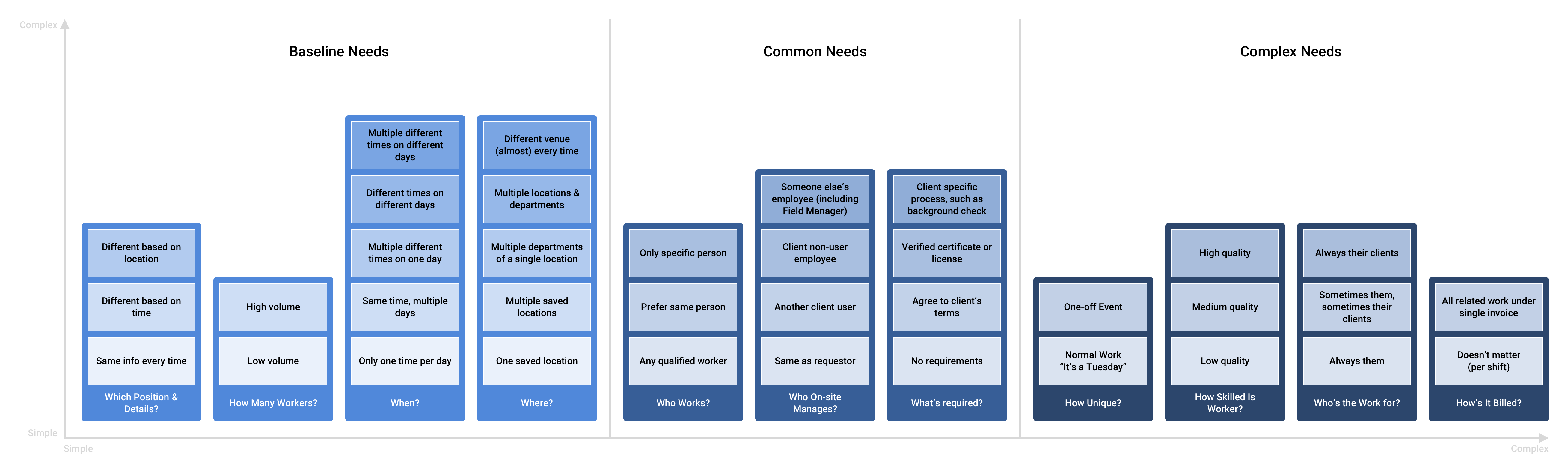
Diagram of Request Needs
-
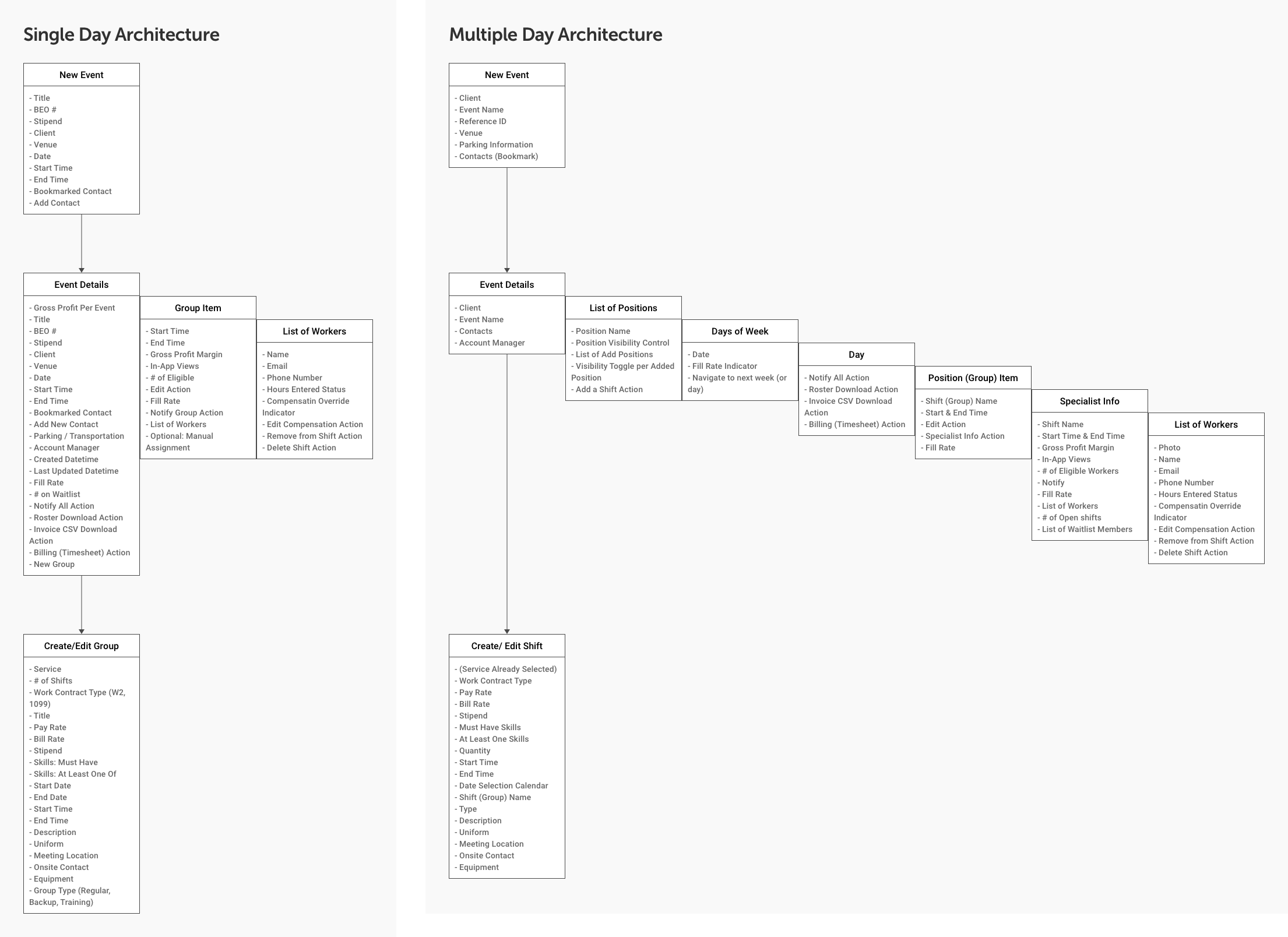
Existing Architecture
Exploration
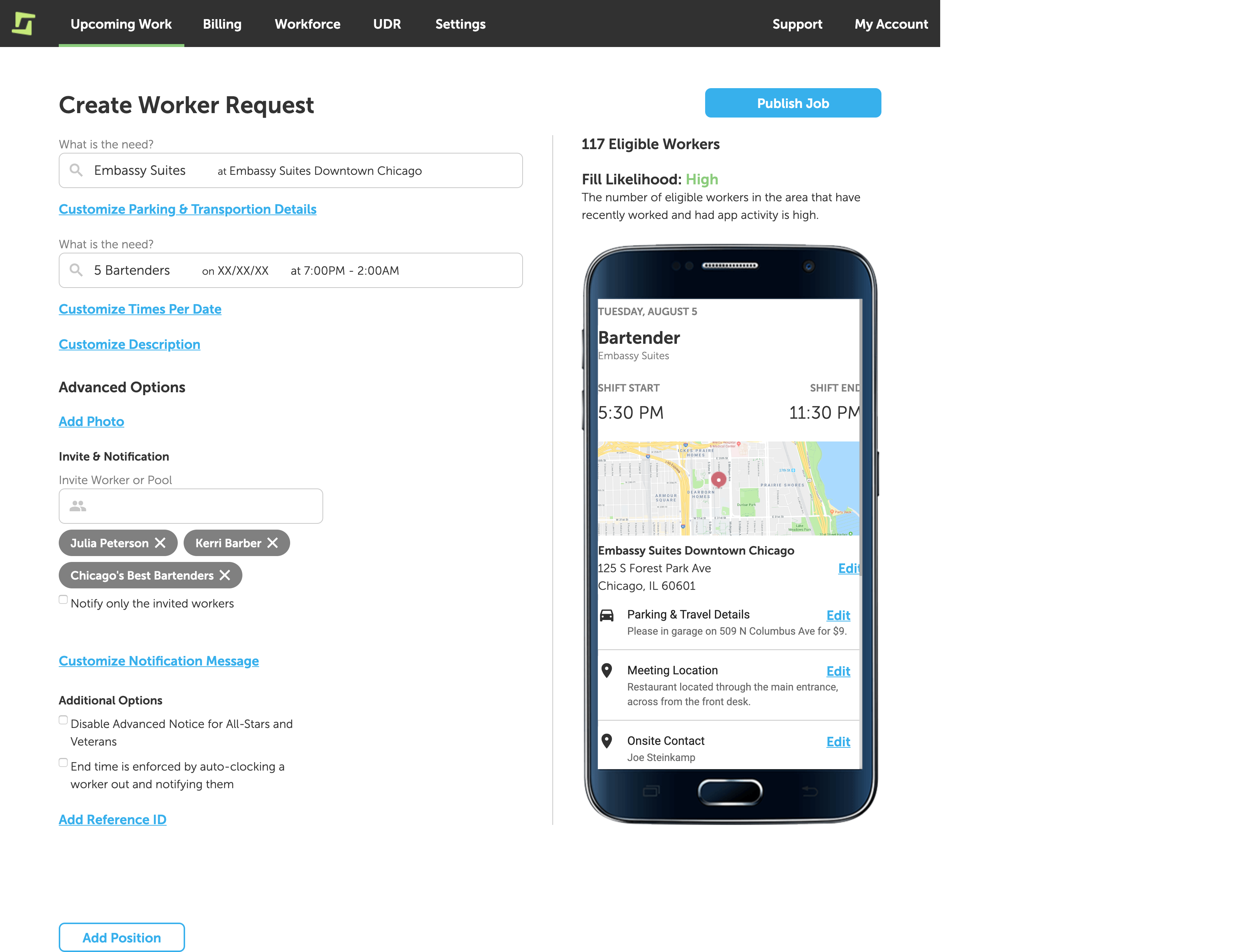
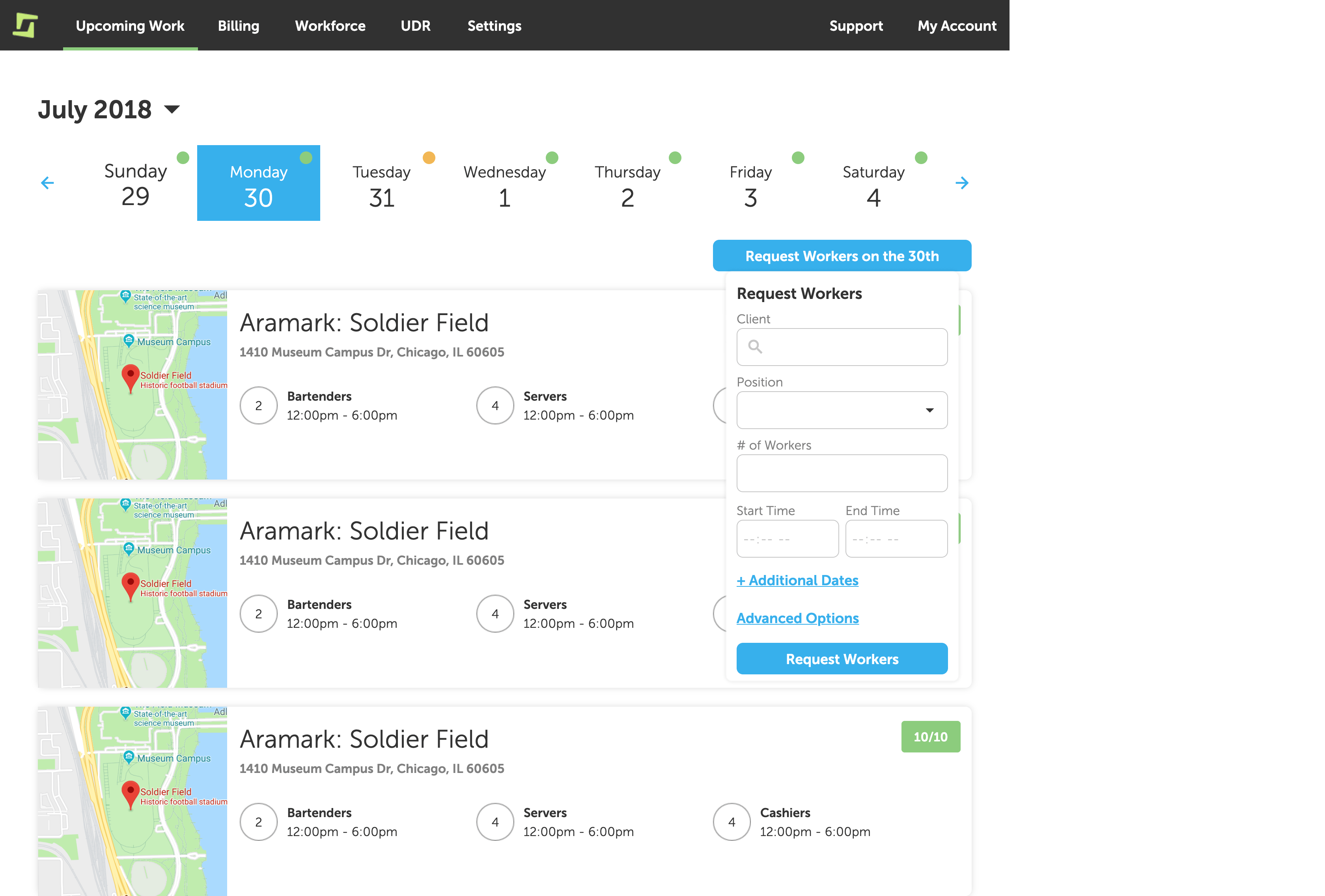
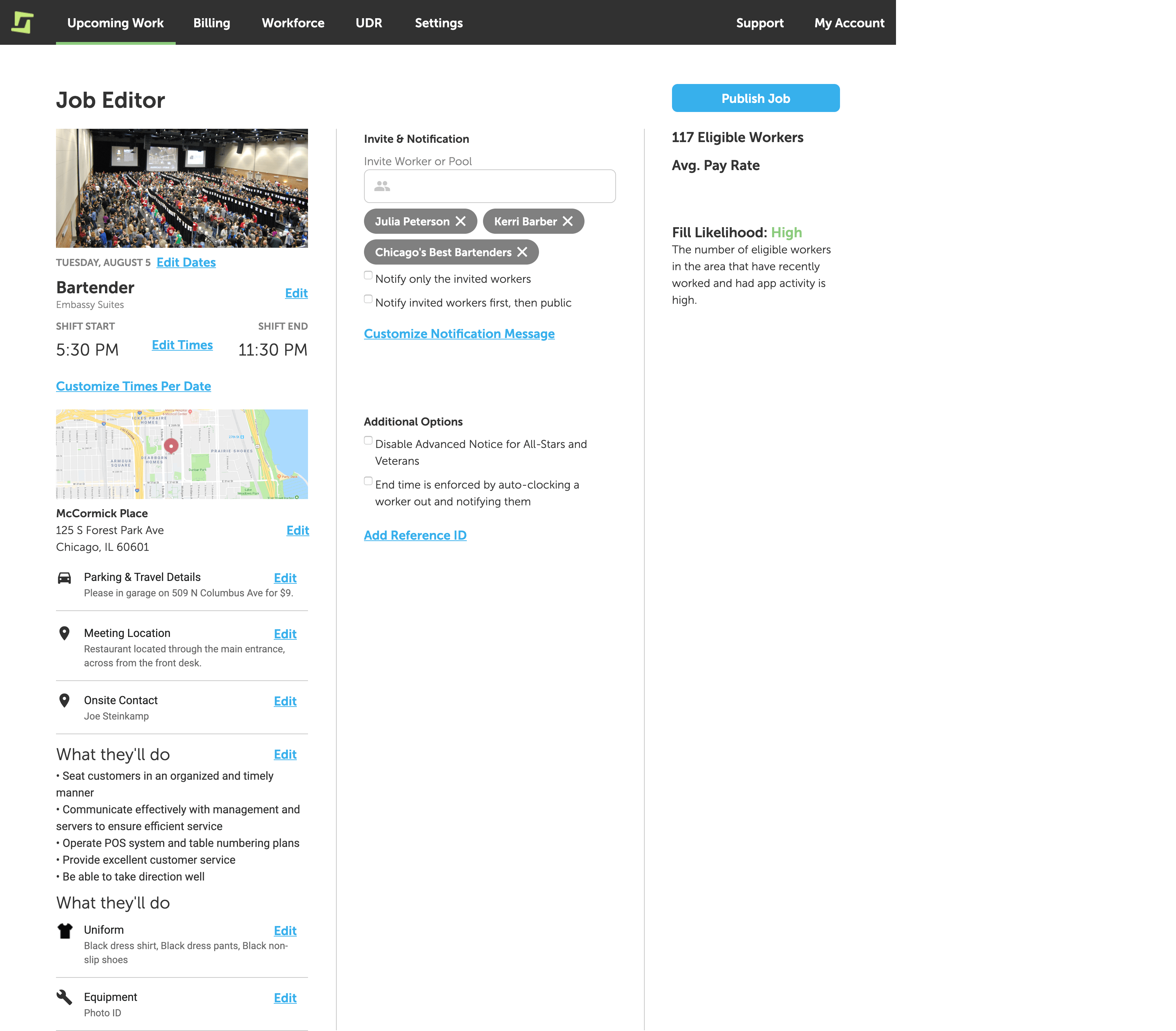
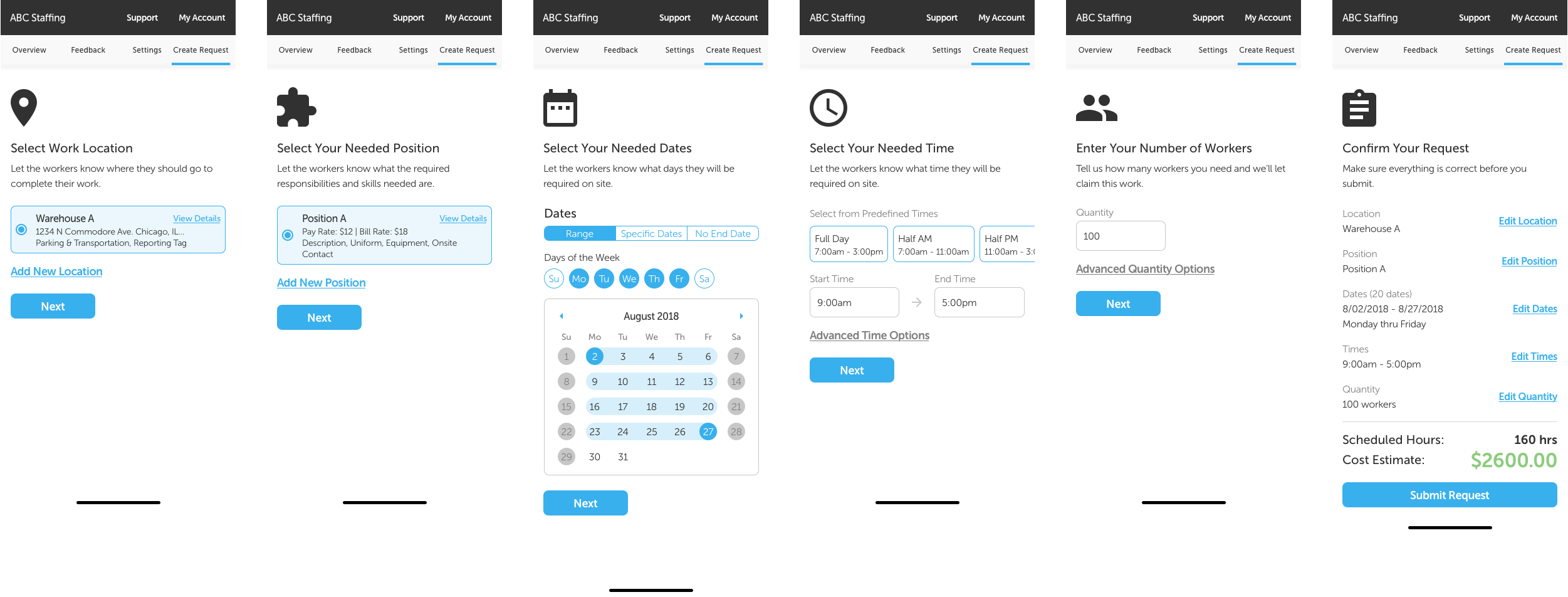
Due to the multiple times this project started there was a lot of exploration from high level conceptual differences to many nuanced iterations that lead to the final solution.
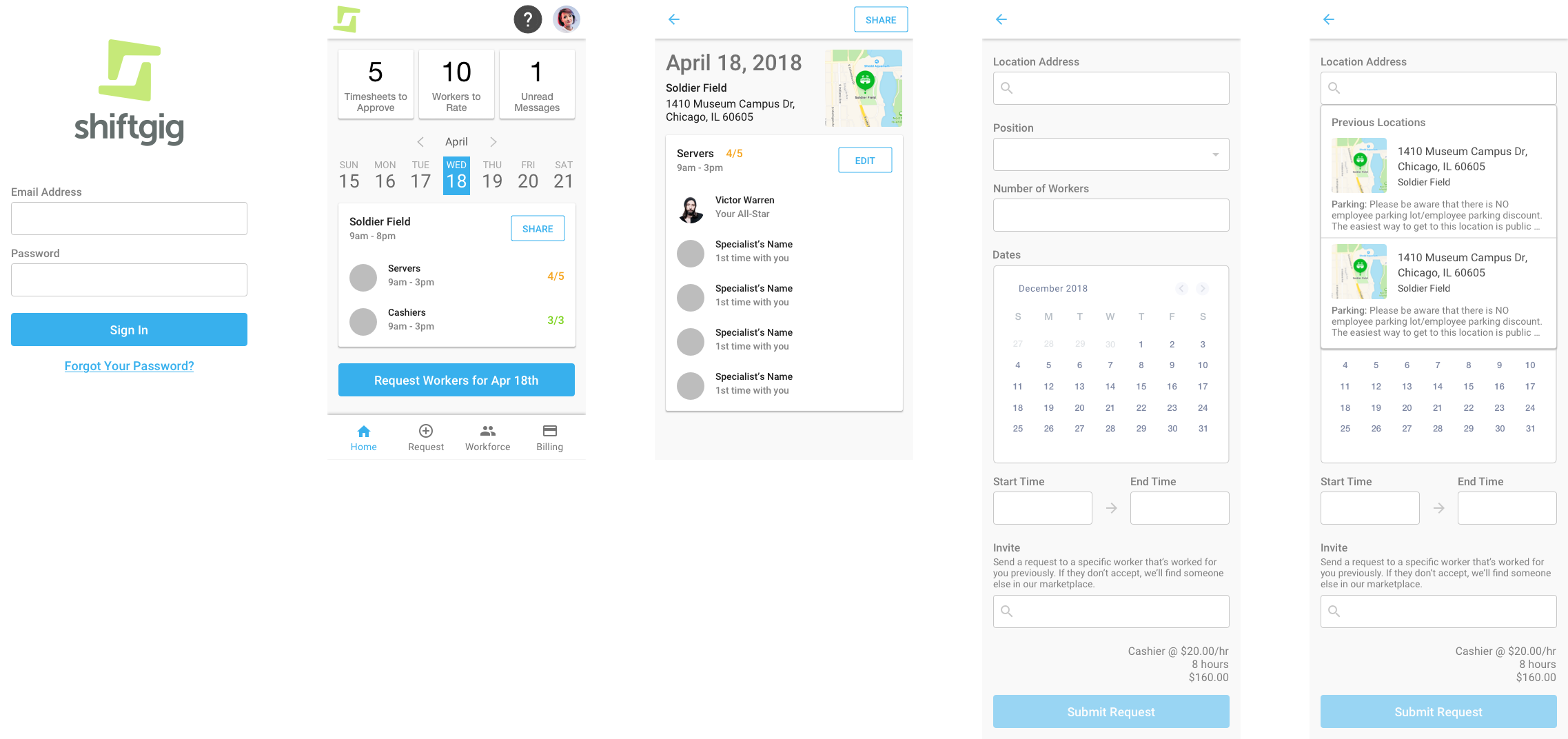
Delivery
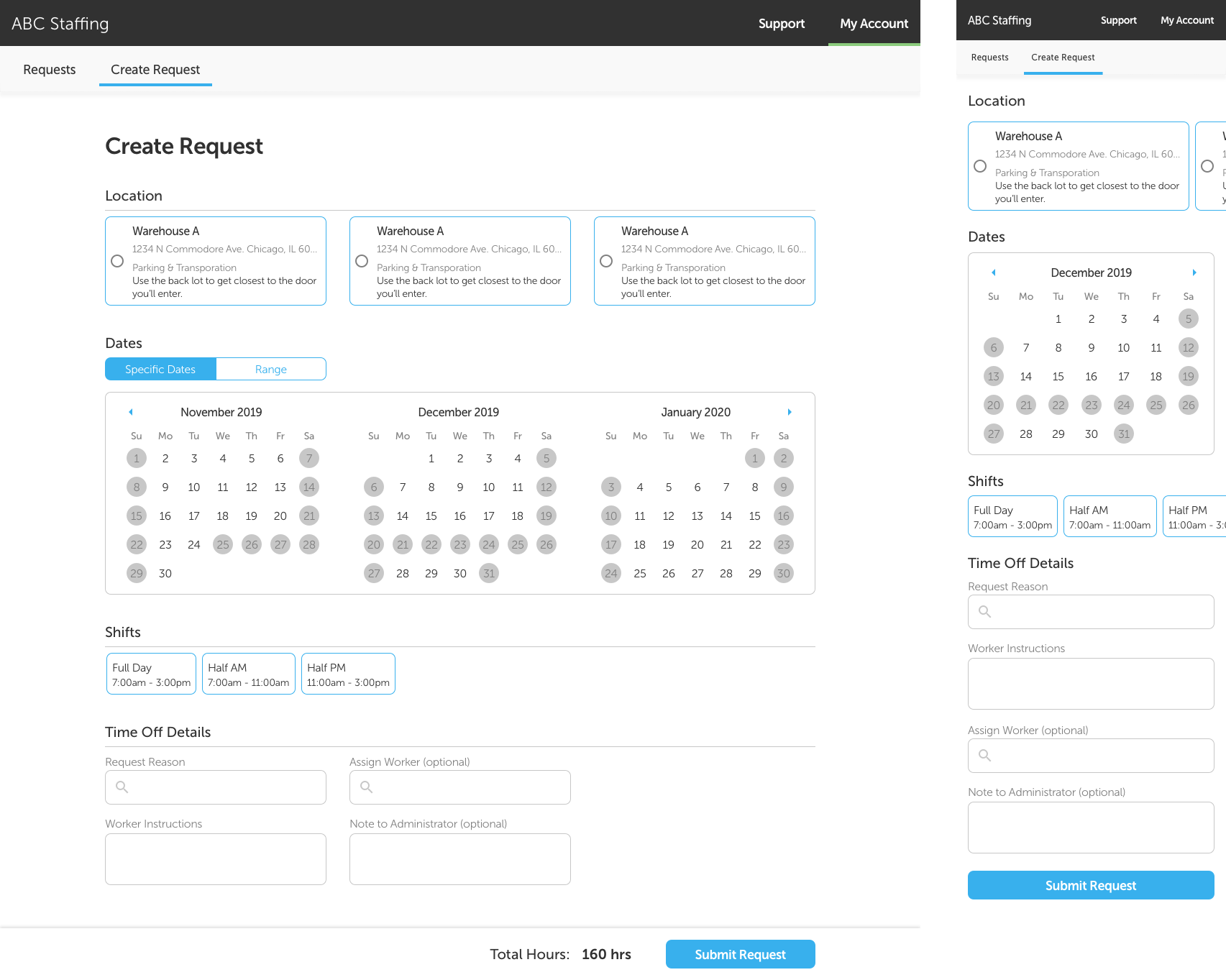
The final solution is a pretty basic single form experience with an advanced template system that underlies the whole data entry. In the best case scenario, the user only has to select which dates, times, the number of workers they need – focused on the core information that always is changing.
Beyond greatly improving the efficiency of the experience, it was the first experience that was fully responsive to support the on-the-go nature of needing to get requests in at a moments notice.
[/passster]